CEV: “This World” and “The World to Come”
ESV: “This Age” and “The Age to Come”
“I tell you any sinful thing you do or say
can be forgiven.
Even if you speak
against the Son of Man,
you can be forgiven.
But if you speak
against the Holy Spirit,
you can never be forgiven,
either in this life
or in the life to come.”
(Matthew 12:32 – CEV)
“And whoever speaks a word
against the Son of Man
will be forgiven,
but whoever speaks
against the Holy Spirit
will not be forgiven,
either in this age
or in the age to come.”
(Matthew 12:32 – ESV)
CEV Time diagram:
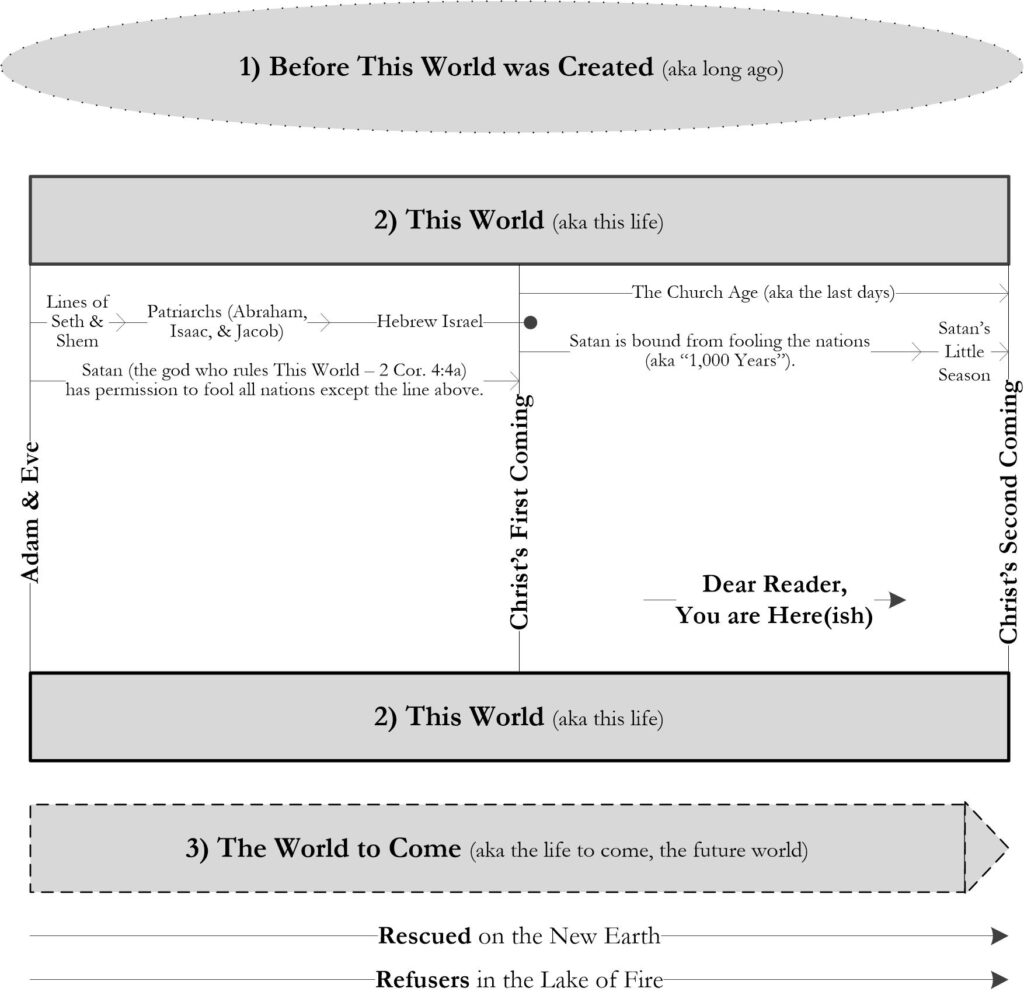
CEV erratum:
- Typo on page 15, paragraph 4: “Believe” should not be capitalized
CEV musings:
None
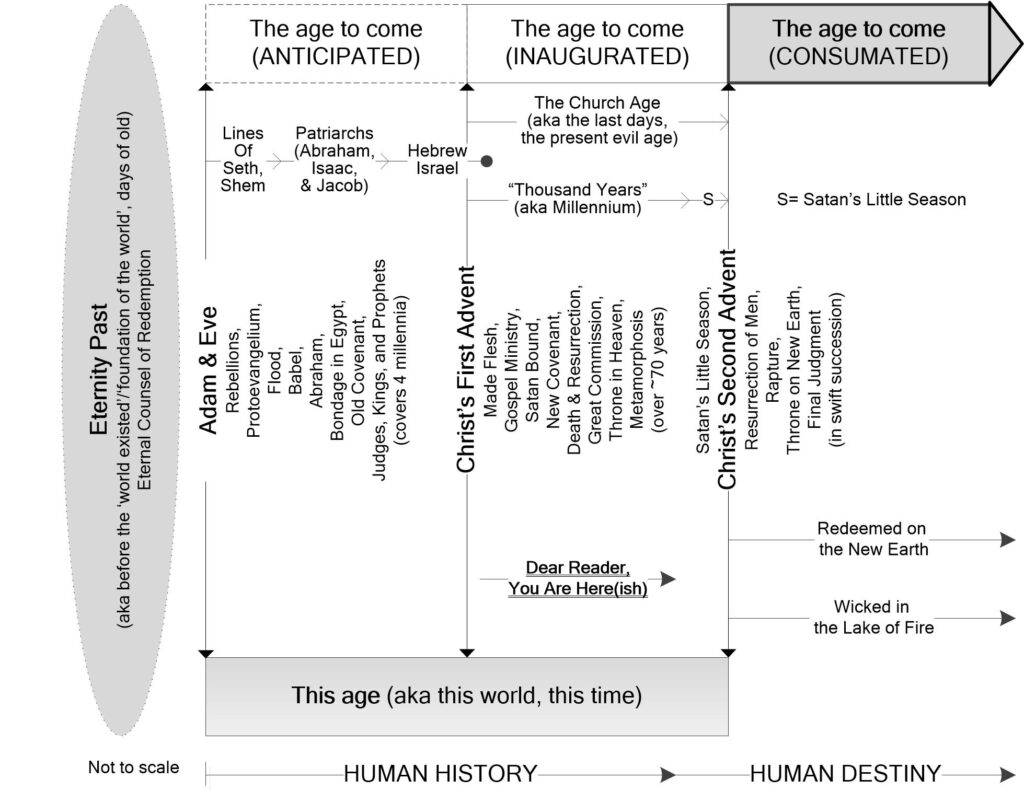
ESV Time Diagram:
ESV Time Diagram (rotated with chapter labeling):
Directory (Intr., Ch. 0)
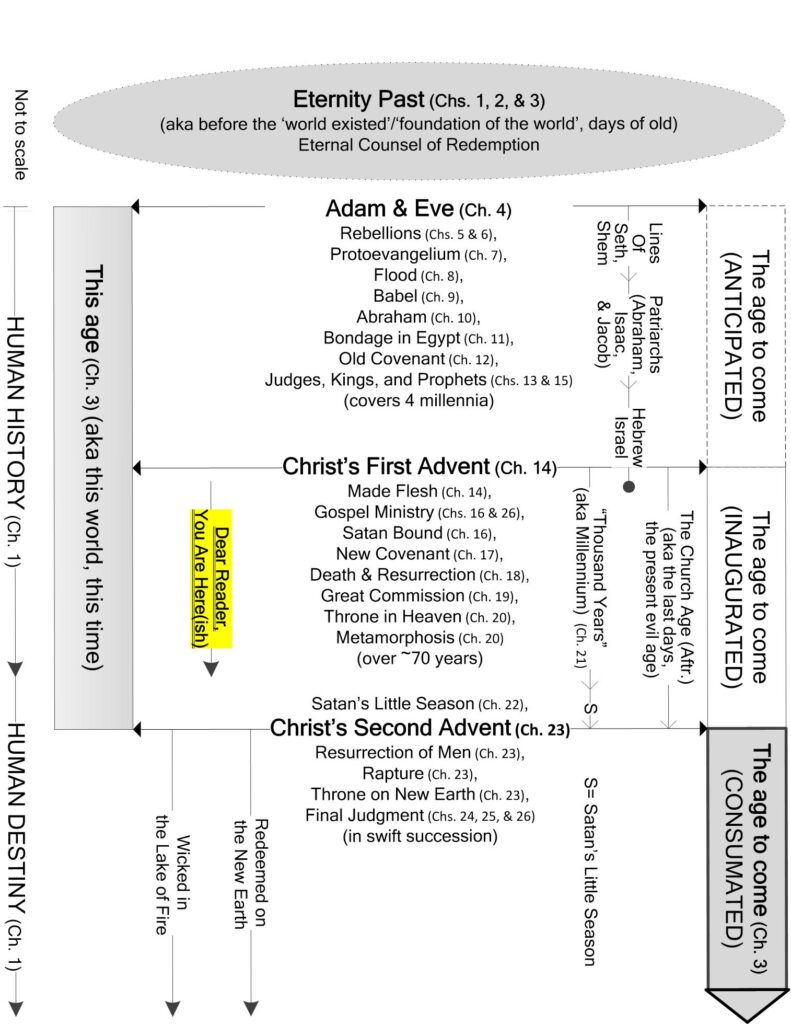
Intr. The Introduction describes the book as a directory of the Bible’s key milestones and concepts (as I understand them).
0. Understanding God’s Word describes how I analyze the Bible to come up with the directory.
1. God’s Glory describes God’s highest priority, which applies to eternity past, human history, and human destiny.
2. Before the Beginning describes God’s eternal counsel of redemption, which took place in eternity past.
3. “This Age” and “The Age to Come” describes the time directory, that which has happened, is happening, and will happen.
4. In the Beginning describes the creation and its ordinances (which are applicable to “This Age”).
5. The Rebellion of the Angels describes the fall of about one-third of the heavenly host, led by Satan.
6. The Rebellion of Man describes God’s prohibition to the couple (created in His image to dwell on earth), and their subsequent fall.
7. The Protoevangelium describes the first gospel (good news) in the midst of the God’s curse. He will provide a Redeemer.
8. From Adam to Noah describes human history from the creation to the flood.
9. The Rebellion at Babel describes the dividing of mankind into nations, all but one of which living in spiritual darkness.
10. Abraham, Justified by Faith describes God’s promises to Abraham and their fulfillment.
11. Living in Bondage describes the enslavement of Hebrew Israel in Egypt.
12. The Old (Mosaic) Covenant describes the deliverance from Egypt and the terms for the relationship between Hebrew Israel and God.
13. The Judges, Kings, and Prophets describes the history of Hebrew Israel from the settling of Canaan to the birth of the Redeemer.
14. The Son of God Made Flesh describes the birth of the Redeemer, now both Son of God and Son of Man.
15. The Flattened Perspective describes the time dimension limitations of the Old Testament prophets, including John the Baptist.
16. The Gospel Ministry of the Redeemer, Jesus Christ, describes how Jesus began his public ministry and provides a brief gospel sermon.
17. The New Covenant describes the terms for the relationship between Christian Israel and God.
18. The Death and Resurrection of the Savior, Jesus Christ, describes the Redeemer laying down His life for sinners and rising again.
19. The Great Commission describes the Savior’s command to spread the gospel and make disciples of all nations.
20. The Metamorphoses of Israel into the Church describes the reorganization of Israel, the Christian remnant emerging as the church.
21. The Tribulation describes the challenges the church faces throughout the church age.
22. “Satan’s Little Season” describes the ramping up of tribulation due to the temporary removal of restrictions on Satan.
23. The Second Coming of the Lord, Jesus Christ, describes “Satan’s Little Season” ending with the return of the King.
24. The Final Judgment describes by way of a brief sermon the separation of the goats from the sheep.
25. An Interview with One in Hell describes the fate of the goats, those who die in their sins, to serve as a warning to unbelievers.
26. Concluding Gospel Appeal is a final brief gospel sermon.
Aftr. The Afterword encourages believers to glorify God by serving Him in His church and concludes with exhortations.
And thus, the Directory takes the Reader from “Eternity Past” to “The Age to Come,” providing a sketch of what God has done, is doing, and will do: and exhorting the Reader to repent and believe and be saved from the wrath to come.
ESV Story erratum:
None
ESV Story musings:
None
ESV Appendix erratum:
None
ESV Appendix musings:
None